No one in Norse myth is harder to pin down than Loki. He is a giant by birth and a god by company. He fights for the gods, then fights against them. He is the one who saves Thor and also the one who gets Baldr killed. At the end of the world he steers a ship of the dead. And there is no known cult of Loki: nobody seems to have worshipped him, and no place-name in the Viking world clearly refers to him either. He seems to have existed only in stories, which perhaps is how he likes it.
Odin’s sworn brother
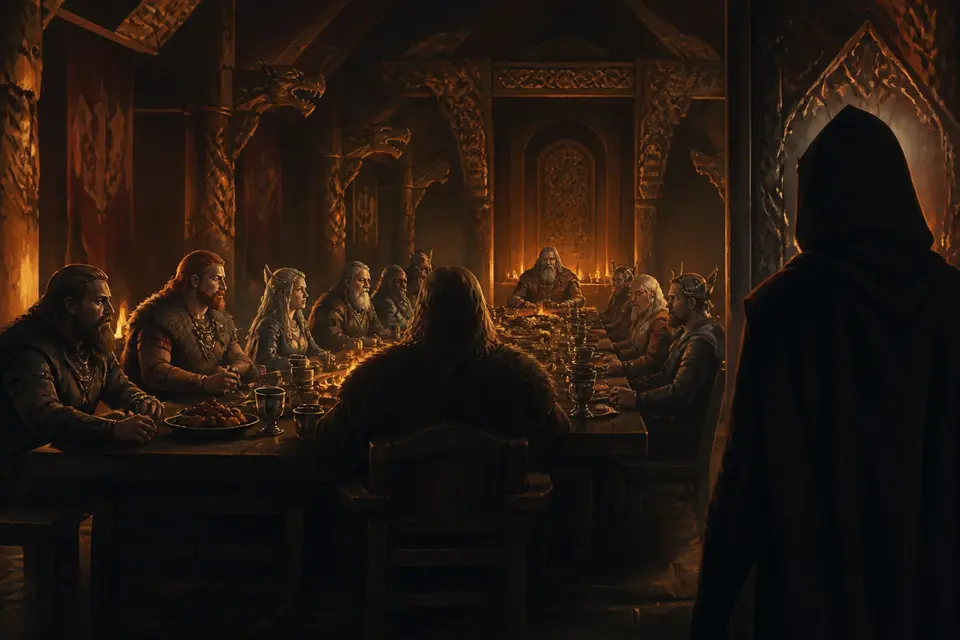
Loki’s father was the giant Fárbauti, “cruel striker,” and his mother was Laufey or Nál. He was not a god by blood. But he was Odin’s blood-brother: in the Lokasenna he reminds Odin that they once mixed blood and swore never to drink without the other. Odin, who does not enjoy being reminded, honors the oath. For a long stretch of the stories, Loki is the gods’ travel companion, their troubleshooter and their problem.
Trouble and treasure
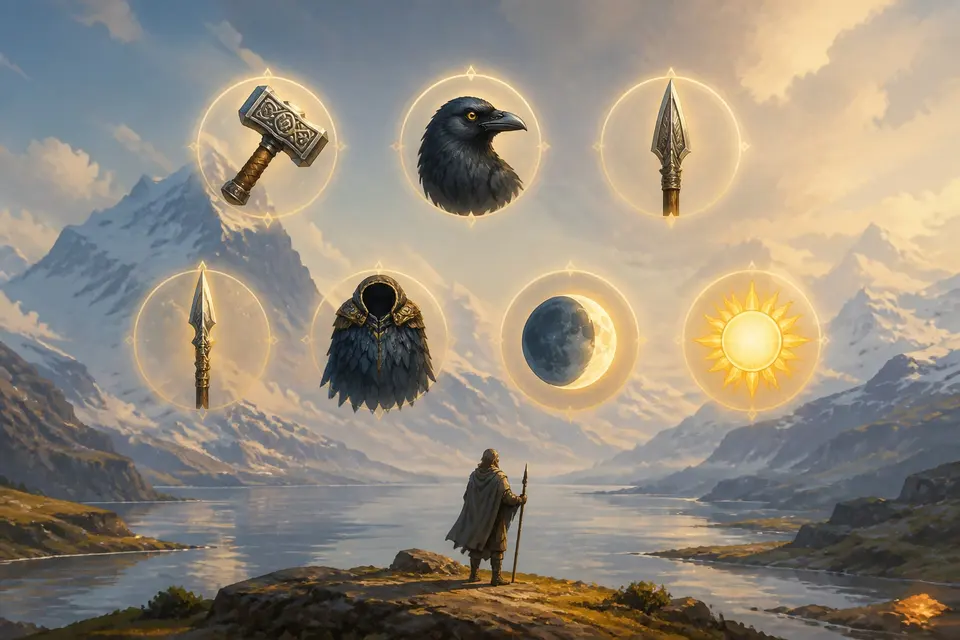
A typical Loki story starts with a prank and ends with the gods being better off. When he cut off Sif’s golden hair, Thor nearly killed him. Loki promised to get her new hair of real gold from the dwarves, the sons of Ivaldi. They made it, along with a spear for Odin that never missed, Gungnir, and a ship for Freyr, Skíðblaðnir, which could be folded up like a cloth and put in a pocket. Loki then bet his head with another pair of dwarves that they could not make anything better, and that wager produced Thor’s hammer, a golden ring and a golden boar. The gods owe their best equipment to his mischief.
The mother of Odin’s horse
One of the strangest stories comes from the Prose Edda. The gods once hired a builder to put a wall around Asgard. His price was the sun, the moon and the goddess Freyja. The gods agreed on a condition: he had to finish in one winter, and could use no help. The builder had a powerful stallion, Svaðilfari, who hauled huge stones. As the deadline approached, it looked as if he would win.
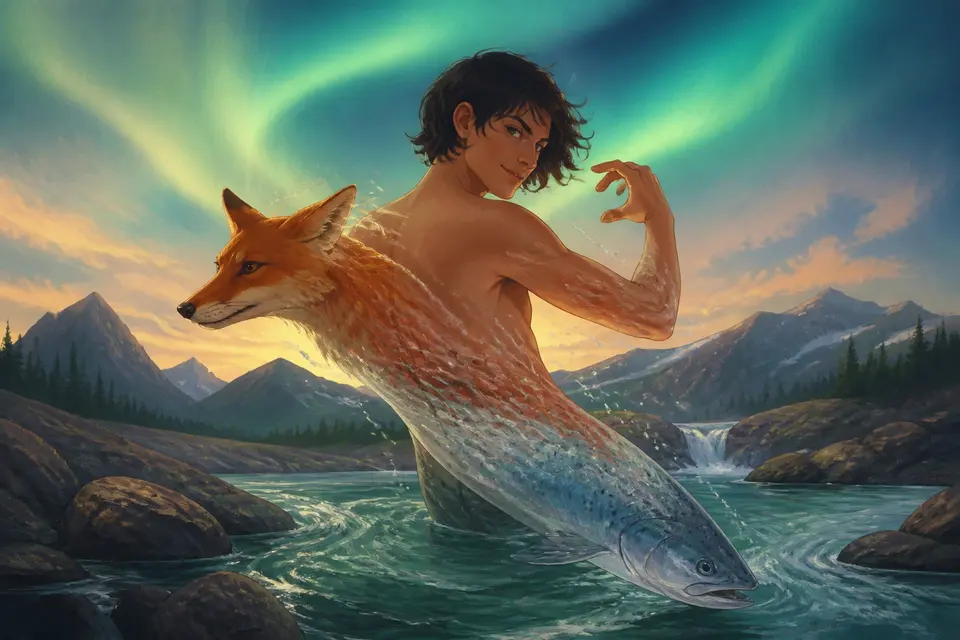
The gods turned on Loki, who had advised them to accept the deal, and threatened him. Loki turned himself into a mare and trotted out into the woods, and the stallion ran after her. The builder lost his chance, the wall was not finished, and when the builder’s rage showed that he was a giant in disguise, Thor killed him.
Some time later, Loki came back with a gray foal that had eight legs. This was Sleipnir, who became Odin’s horse and could cross air and sea. Loki, in other words, gave birth to the best horse in the world. It is one of the most famous cases of gender-shifting in Norse tradition, and the sagas tell it without comment.
Baldr
The story that changes everything is the death of Baldr. After the gods had made everything in the world swear not to harm him, Loki, disguised as an old woman, learned from Frigg that the mistletoe had not been asked. He plucked it, made it into a dart and gave it to Höðr, Baldr’s blind brother, who was standing apart at the gods’ game of throwing things at the invulnerable god. Höðr threw it. Baldr fell dead.
The gods tried to bring him back from Hel. Hel said she would release him if everyone in the world wept for him. Everyone did, except one giantess, Þökk, who was probably Loki in disguise. Baldr stayed dead.
Punishment
Eventually the gods caught Loki. They bound him in a cave with the entrails of his own son, and fastened a serpent above his head, so that its venom would drip onto his face. His wife, Sigyn, stayed with him and held a bowl to catch the poison. When the bowl filled and she had to empty it, a drop would fall on his face, and he would jerk and twist so violently that the earth would shake. That, the Norse said, is what an earthquake is.
His children
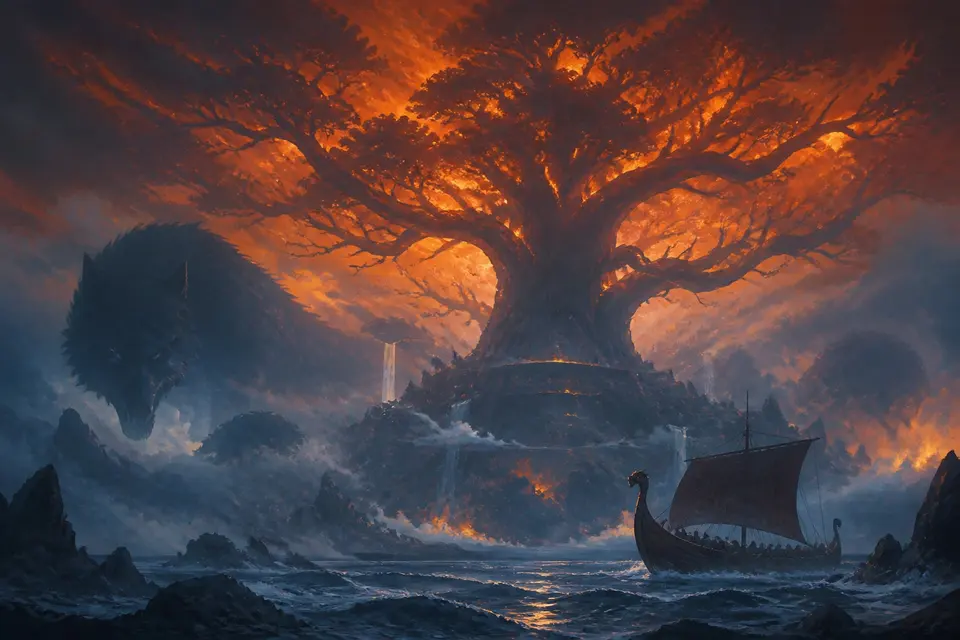
With the giantess Angrboða, Loki fathered three monstrous children: the wolf Fenrir, the Midgard serpent Jörmungandr and Hel, the ruler of the dead. The gods threw the serpent into the sea, put the wolf in chains and sent the girl to the underworld. All three come back at Ragnarök.
Neither good nor evil
Loki is sometimes called the Norse devil, but the label does not fit. In many stories he rescues the gods, and, as the Lokasenna shows, he has a talent for telling truths that the others would prefer to ignore. He is a figure of change: a shape-shifter in a world that wants things to stay the way they are.
Some of the most interesting modern writing about him sees him that way: as the one who makes the story move. Without Loki, there would be no hammer, no horse and no Ragnarök. Without Loki, the Norse gods would be perfect and boring, and nothing would ever happen.