Every city likes to believe it began with something grand. Rome’s story starts with a murder, a basket in a flooded river and a wolf. It is a strange way to begin the story of a city that would one day rule the Mediterranean, but the Romans did not hide it. They were proud of it.
A throne and a priestess
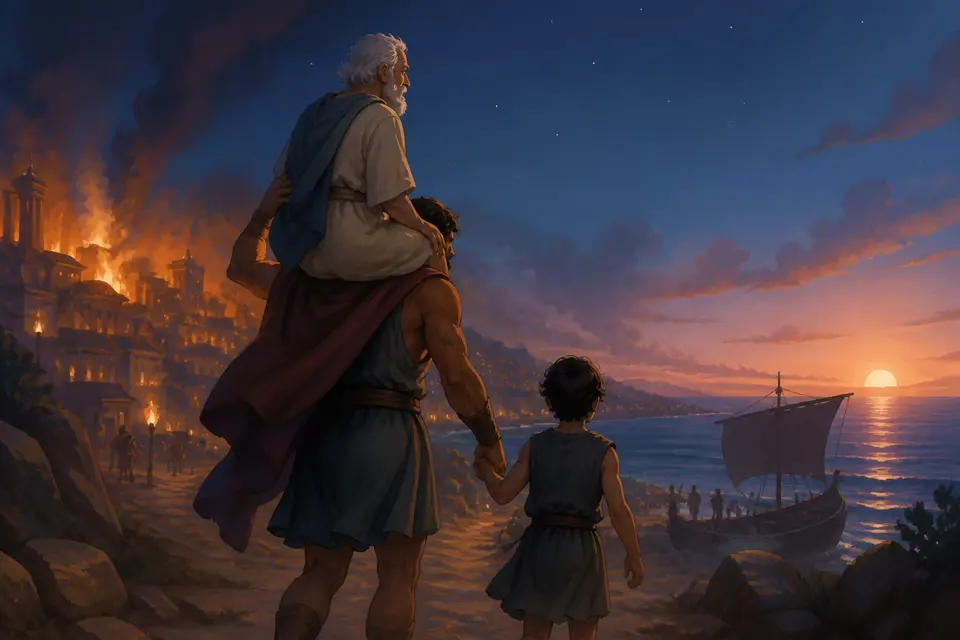
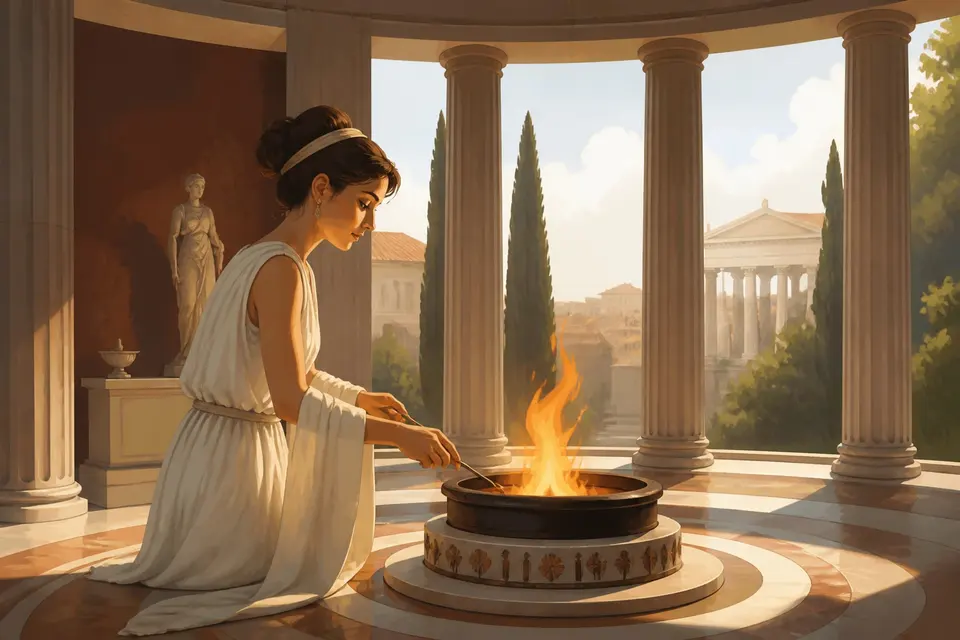
The story begins before the twins. Aeneas, the Trojan hero who had fled his burning city, founded a line of kings in Latium. Several generations later, in the city of Alba Longa, a king named Numitor was overthrown by his younger brother Amulius. To make sure that Numitor would have no heirs, Amulius killed his nephews and forced his niece, Rhea Silvia, to become a Vestal Virgin, a priestess who was required to remain unmarried.
It did not work. Rhea Silvia became pregnant. She said her lover was the god Mars, who had come to her in the sacred grove. She gave birth to twin boys. Amulius, furious, imprisoned Rhea Silvia and ordered the babies to be thrown in the Tiber.
The basket
The servant who was told to drown them, as the historian Livy tells it, could not bring himself to go all the way. The Tiber was in flood. He set the babies down in a trough on the edge of the water, thinking the river would do the job. Then the flood receded, leaving the basket on dry land at the foot of the Palatine hill, under a fig tree.
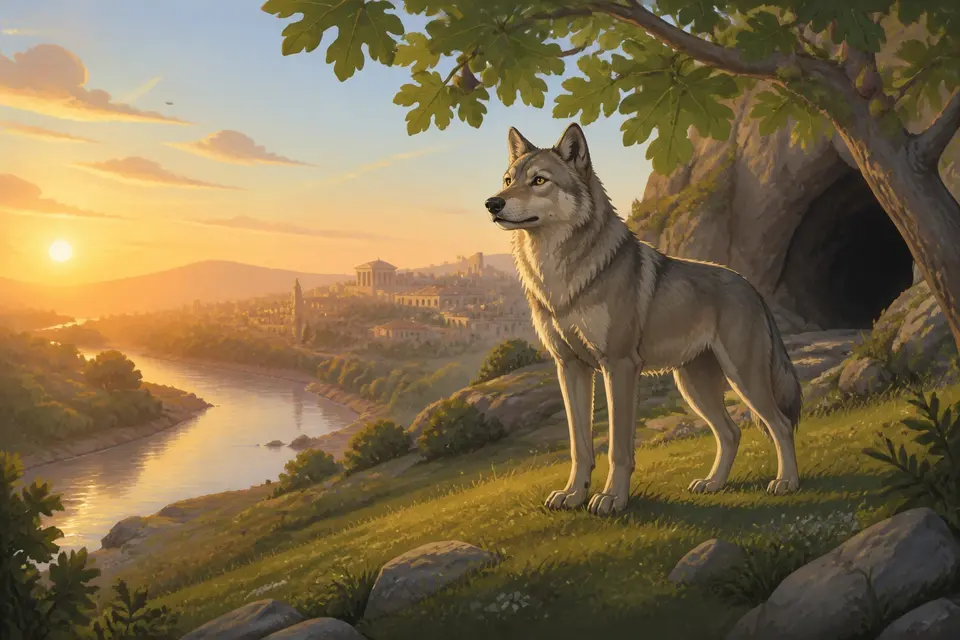
That is where the wolf found them. A female wolf, thirsty, came down to drink and, according to Livy, heard the babies crying and nursed them. A woodpecker, a bird sacred to Mars, also brought them food. They were found by Faustulus, the king’s shepherd, who took them home to his wife, Acca Larentia, and raised them as his own.
The word “lupa”
The historian Livy mentions an interesting alternative. The Latin word lupa means she-wolf, but it was also a slang word for a prostitute. Perhaps, he says, Acca Larentia was one, and the “wolf” was a pun. Other writers made the same joke. It is the Roman equivalent of explaining a legend by finding a practical cause for it, and it shows that even the Romans were not sure.
Revenge and a city
When the boys, named Romulus and Remus, grew up, they were athletic and brave. In a fight with Numitor’s shepherds, Remus was captured and brought to the old king. Numitor looked at the young man and realized who he might be. The story came out. The brothers gathered their friends, killed Amulius and restored their grandfather to the throne.
They then decided to found a city of their own on the hills where they had been raised. There was a problem: which hill? Romulus preferred the Palatine. Remus preferred the Aventine. To settle it, they agreed to consult the omens, birds seen in flight. Remus saw six vultures first, but Romulus saw twelve a little later. Each claimed to have won.
The wall
The quarrel ended in blood. In the most common version, Romulus began to dig a trench and build a wall around the Palatine hill, and Remus mocked it by jumping over. Romulus, in anger, killed him, or one of his men did. “So perish anyone else who leaps over my walls,” Romulus said, according to Livy. The city took Romulus’s name.
Roman writers placed the date of the founding on April 21, 753 BCE. The date comes from the scholar Varro, who worked it out in the first century BCE. Archaeologists have found traces of huts on the Palatine hill from about the same time, which is a nice coincidence, though no one believes that the story is exact.
The statue
The symbol of Rome is a bronze statue called the Capitoline Wolf, kept in the Capitoline Museums. It shows a lean, alert wolf with her head turned, and two small boys under her belly. For a long time, the wolf was believed to be Etruscan, from the fifth century BCE, with the twins added in the Renaissance by the sculptor Antonio Pollaiuolo. In recent years, a number of studies of the casting technique and radiocarbon dating have suggested that the whole thing might be medieval, from the eleventh or twelfth century. The question is not settled.
What the story says about Rome
A founder who killed his own brother is a hard thing to put on a coat of arms. But the Romans seem to have understood something about themselves. They were a city built by outsiders, by a group of ambitious men on a hill, and the founding was a violent act. Later Roman writers, including the poet Horace, wrote about it with a certain horror, as if it were an original sin.
Yet the wolf is still there, on the city’s emblems, on its football club badges and on thousands of souvenirs. It turns out that being raised by a wild animal is a good origin story, whatever else it says.