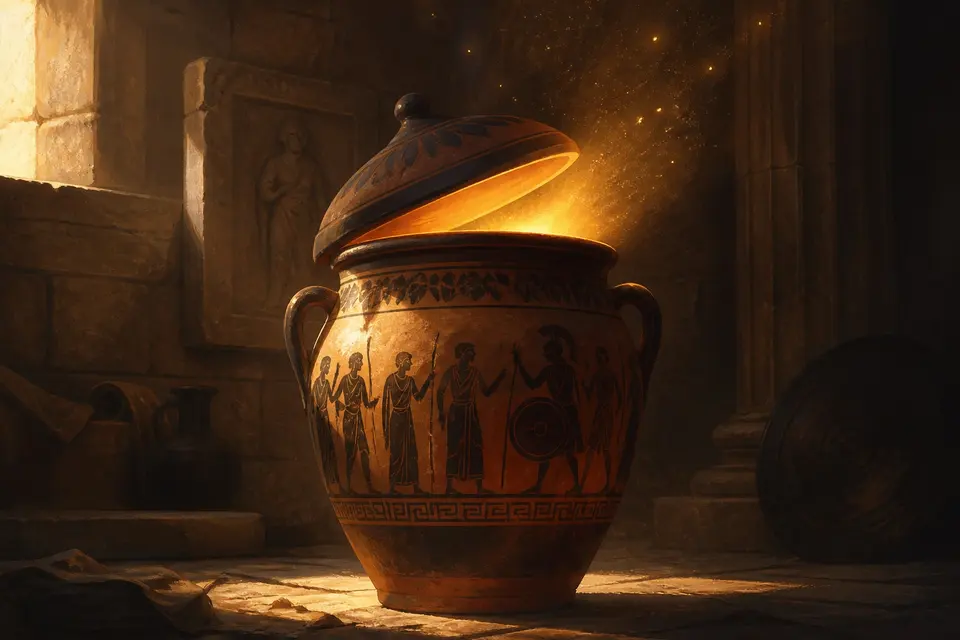
In 1957 a team of archaeologists from the University of Pennsylvania cut through a huge burial mound at a site in central Turkey and broke into a wooden chamber. The chamber had been closed for about 2,700 years. Inside, laid out on a bed of purple and blue cloth, was the skeleton of a man who had died at around sixty. Around him were 157 bronze vessels, set out as if for a banquet. The mound was at Gordion, the capital of ancient Phrygia, and the tomb was nicknamed “Midas Mound.” The nickname was a bit of a stretch, but not as much as you would think.
A king named Mita
Phrygia was a powerful kingdom in the highlands of Anatolia in the early first millennium BCE. Greek writers, including Herodotus, speak of a king named Midas and say he sent rich gifts to Delphi, including a throne. But we do not have to rely on the Greeks. Assyrian inscriptions of the late eighth century BCE, from the reign of Sargon II, mention a king “Mita of Mushki” who made trouble on Assyria’s western border and later made peace. Most scholars think this is the same man. His real life was a diplomatic juggling act between a superpower and his own ambitions.
The man in the tomb at Gordion was probably not Midas himself, since the date is a little early. He was likely Midas’s father, or another close relative. But the chamber shows what the kingdom could afford.
The golden touch
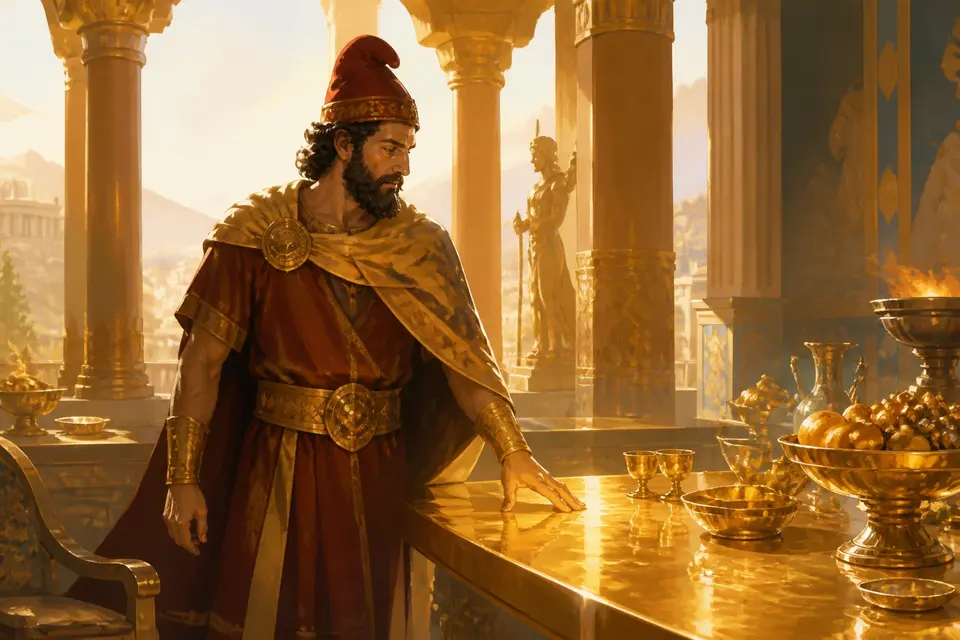
The best-known story about Midas comes from Ovid’s Metamorphoses. Some Phrygian farmers find Silenus, the old drunken companion of the wine god Dionysus, wandering lost, and bring him to their king. Midas treats him kindly, feasts him for ten days and returns him to Dionysus. The god is delighted and promises Midas any wish.
Midas thinks for a moment and says: let everything I touch turn to gold. Dionysus grants it, sadly, because he sees what is coming. At first the king is overjoyed. He plucks a twig from an oak and it becomes gold. He touches a stone, a clod of earth, an apple, and each shines. Then he sits down to dinner, and the bread turns hard in his hand, the meat to a shining lump, the wine to a stream of liquid metal. He cannot eat or drink. In later retellings, notably a famous nineteenth-century children’s version by Nathaniel Hawthorne, his daughter hugs him and she, too, is turned to gold.
Starving, he begs Dionysus to take it back. The god tells him to wash in the source of the river Pactolus, near the Lydian city of Sardis. He does, and the power flows into the water. Ever since, Ovid says, the river’s sand has been golden. And that is true in a way: the Pactolus really did carry gold dust, and Lydian kings, including the legendary Croesus, grew rich from it. They also invented some of the earliest coins, in electrum, the gold-silver alloy found in that river.
The donkey ears
Midas has a second famous story, and it is funnier. When the satyr Marsyas and the god Apollo had a music contest, or in another version when Pan challenged Apollo, Midas was asked to judge. He voted for Pan’s pipes. Apollo, furious that anyone could prefer them to his lyre, turned Midas’s ears into those of a donkey.
The king hid them under a turban. Only his barber knew. The barber was desperate to tell someone and could not. So he dug a hole in the ground, whispered the secret into it and covered it up. But reeds grew from that spot, and whenever the wind blew, they whispered: King Midas has donkey’s ears.
The funeral feast
Back at Gordion, the tomb had a final surprise. In the 1950s the bronze vessels were studied only for their shape. In the late 1990s and 2000s, a team led by the biomolecular archaeologist Patrick McGovern analyzed the residues inside them. They found traces of grape wine, barley beer and honey mead, mixed together into a single drink. It was a funeral banquet: lamb or goat stew with lentils, spiced, served with a strange and powerful grog.
McGovern later helped the American brewery Dogfish Head to recreate a modern version. It was released in 2000, and has been sold ever since under the name Midas Touch.
So the story of Midas runs along two tracks. One is a folktale about a wish and what greed costs. The other is a real king, a real tomb and a real, rather good party. Both have outlasted the gold.