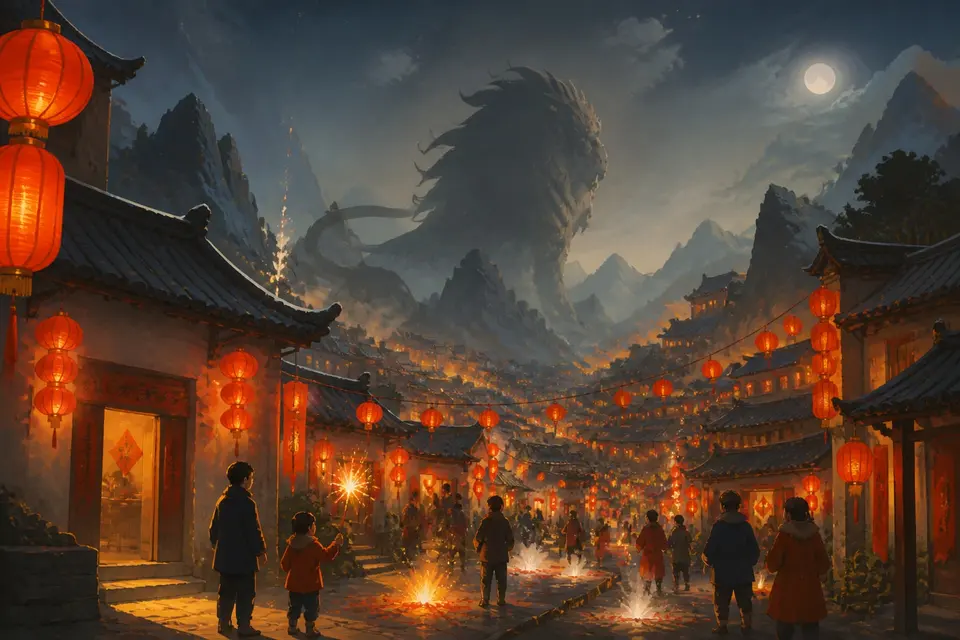
On September 25, 1924, a brick pagoda on the shores of West Lake in Hangzhou, China, suddenly collapsed. It was called the Leifeng Pagoda, and it had stood for nearly a thousand years. Crowds gathered. Some people grabbed bricks as souvenirs, because, according to folk belief, a brick from the tower was a charm for good luck and healing. The writer Lu Xun, one of the greatest of modern China, wrote a famous essay about the event. For the people of Hangzhou, there was one more reason for the excitement: according to the legend, the tower had a prisoner inside. She was a snake, and she was in love.
A story in many versions
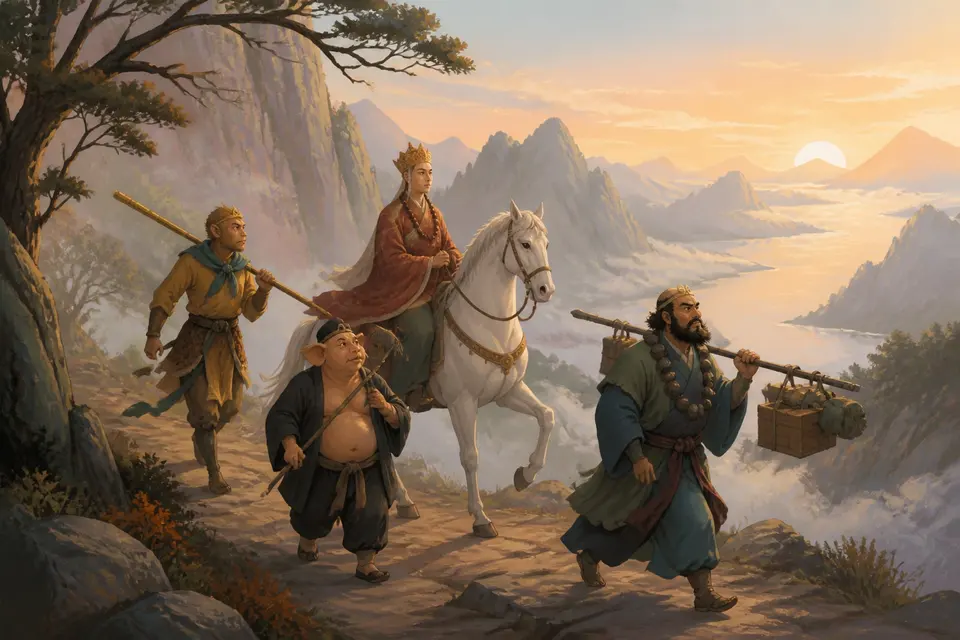
The Legend of the White Snake is one of the four great folk tales of China. It has been told and retold for about a thousand years, in storytelling, opera, novels and film, and no two versions are quite the same. It seems to have developed in the area around Hangzhou from earlier tales of snake spirits. The best-known literary version is a short story by Feng Menglong, published in the 1620s, with the title “Madame White Is Forever Imprisoned Beneath Leifeng Pagoda.”
The meeting
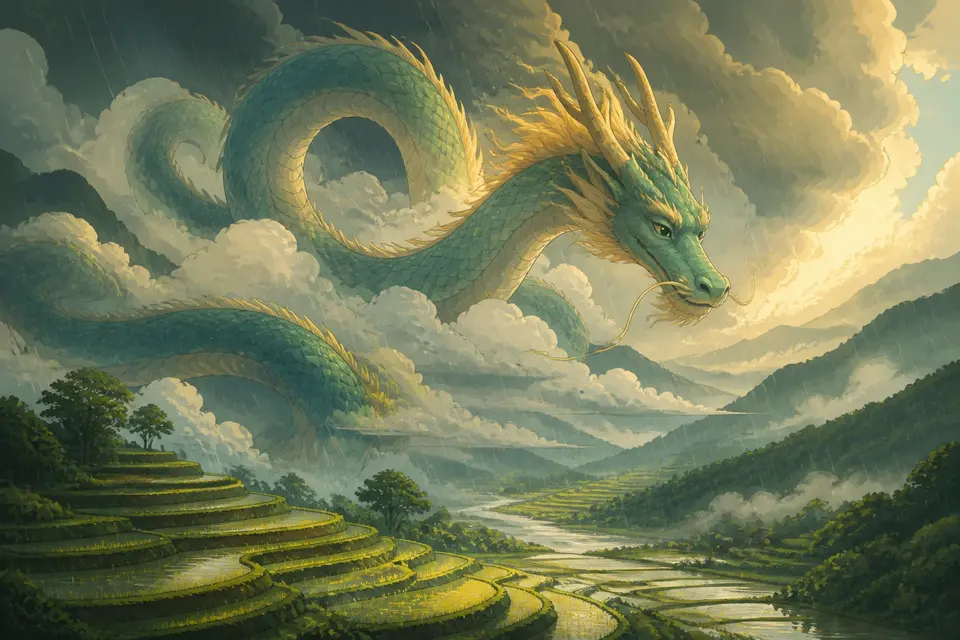
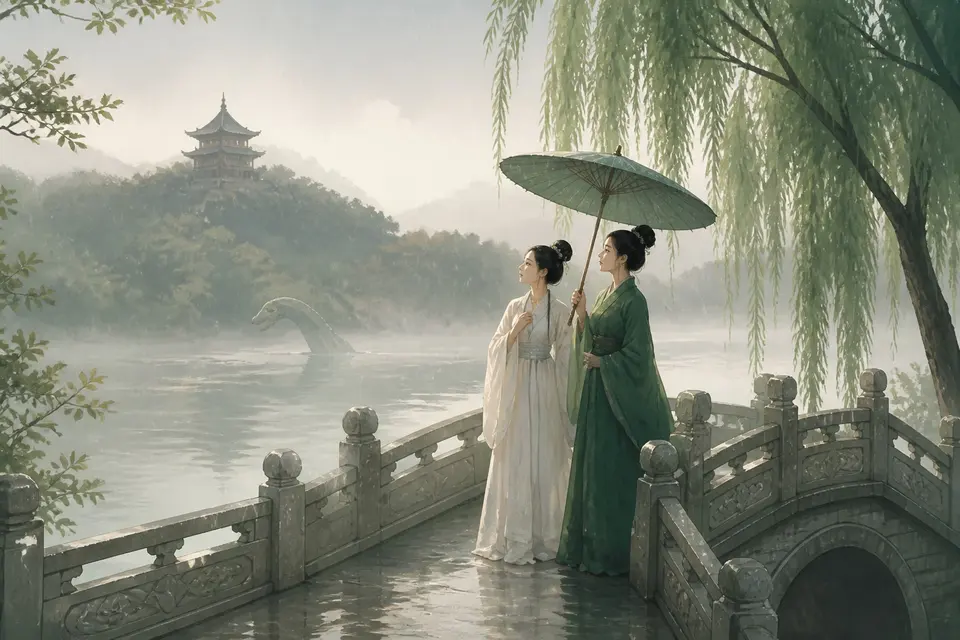
The heroine is Bai Suzhen, a white snake who has spent a thousand years cultivating herself until she can take human form. With her companion, a green snake, Xiaoqing, who becomes her maid and sister, she goes down to the human world, to Hangzhou, in the spring. At the Broken Bridge on West Lake, on a rainy day, she meets Xu Xian, a young pharmacist. He lends her an umbrella. They fall in love and are soon married.
The two women are in some versions more than snakes: they are spirits who have gained powers through long discipline. Bai Suzhen, with her medical knowledge, helps her husband open a pharmacy, and they heal people in the town.
The monk
The trouble starts with a Buddhist monk named Fahai. He discovers that Xu Xian’s wife is not human, and tells the husband. Xu Xian does not believe him. Fahai gives him a test: on the Dragon Boat Festival, a day when, according to custom, people drink wine mixed with realgar, a mineral thought to repel snakes and evil spirits, to drink it with his wife.
Bai Suzhen, hoping to hide her nature, drinks the wine. It makes her sick, and when Xu Xian goes to look in on her, he finds a huge white snake coiled in the bed. He dies of fright.
The theft of the herb
Devastated, Bai Suzhen sets off on a dangerous journey to a sacred mountain to steal a magic herb, a lingzhi mushroom of immortality, which will revive her husband. She fights the guardians and nearly dies, and is spared only when the keeper of the herb is moved by her devotion. Xu Xian comes back to life.
The battle and the tower
Fahai, however, will not give up. He lures Xu Xian to his temple and keeps him there. Bai Suzhen and Xiaoqing gather their forces and rise against the monk in a great battle of the waters, flooding the temple of Jinshan with the river. But because she is pregnant, and because the flood is killing innocent people, she is eventually defeated. Fahai uses a magic bowl to trap Bai Suzhen, and imprisons her under the Leifeng Pagoda, where she will stay until the tower falls.
In some versions, her son grows up, passes the imperial examinations and returns to the tower to free his mother. In others, the pagoda falls, as it did in reality, and she is liberated. In still others, Xiaoqing, who had gone away to practice for years, returns, defeats Fahai and frees her sister.
Who is the villain?
What makes the story so compelling is that, over time, the sympathies have shifted. In the earliest versions, Bai Suzhen is a dangerous snake demon, and Fahai a righteous monk who saves a man from a monster. By the twentieth century, readers took the other side. Bai Suzhen is a loving wife who has done nothing wrong except be what she is, and Fahai is a meddling, rigid, intolerant figure who destroys a happy family out of dogmatism. In Lu Xun’s essay, written after the pagoda fell, he cheerfully says that he was happy to see the tower go.
The screen versions
The legend has been adapted many times. A 1958 Japanese animated film, Panda and the Magic Serpent (Hakujaden), produced by Toei Animation, was the first full-length color anime film and helped inspire a young Hayao Miyazaki to go into animation. The 1993 Hong Kong film Green Snake, directed by Tsui Hark, focused on Xiaoqing. Television series from the 1990s onwards made the story familiar to millions, and countless operas and plays continue to perform it.
The pagoda today
The Leifeng Pagoda was rebuilt in 2002, on the same site, as a modern structure of steel and brick with an elevator, and it is a popular tourist attraction. The original foundations are preserved beneath it and can be seen by visitors.
What it says
At its heart, the Legend of the White Snake is a story about love across boundaries, and about who is allowed to love whom. It is also about the force of rules, and what happens when someone insists on enforcing them. The snake is not a monster. She just wants a pharmacy, a husband and a rainy day on a bridge.