In the British Museum there is a long strip of papyrus, more than thirty meters long, called the Greenfield Papyrus. It was made around 950 BCE for a priestess named Nesitanebetisheru, and it is a kind of instruction manual for dying. It has spells to open doors, to avoid being eaten by a snake and to make sure that one’s heart does not testify against one. If you ever need convincing that the ancient Egyptians took the afterlife seriously, spend five minutes with it.
First, keep the body
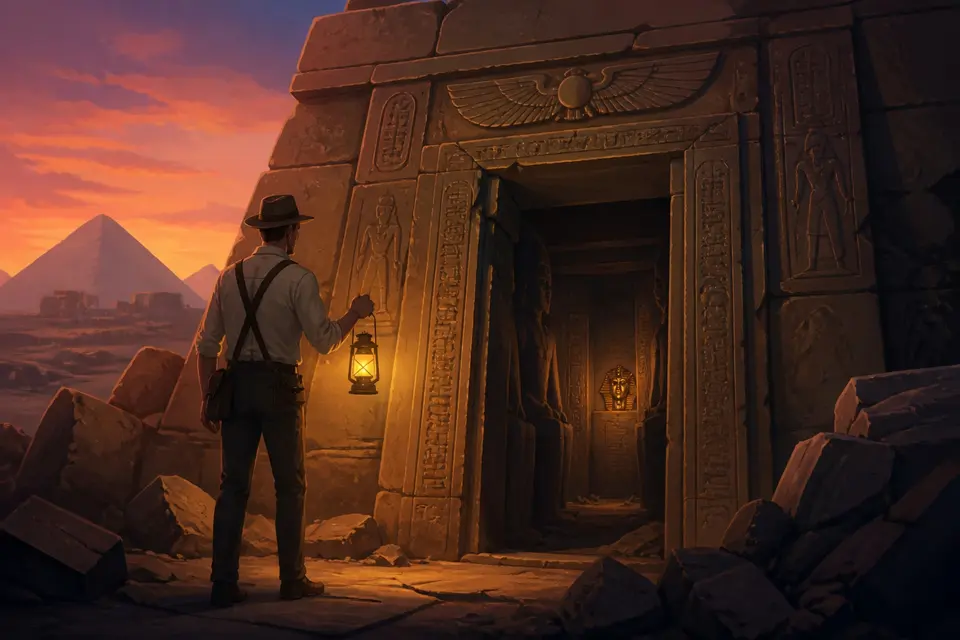
The journey began on earth, with a body in good repair. Embalmers, working in a tent or workshop near the burial ground, took about seventy days to preserve a body. They removed the brain, usually by pulling it out through the nose with a hook, because they thought it was unimportant. They took out the liver, lungs, stomach and intestines, dried them and stored them in jars. The heart they left where it was. For the Egyptians, the heart, not the brain, was the seat of thought, feeling and conscience, and it would be needed later.
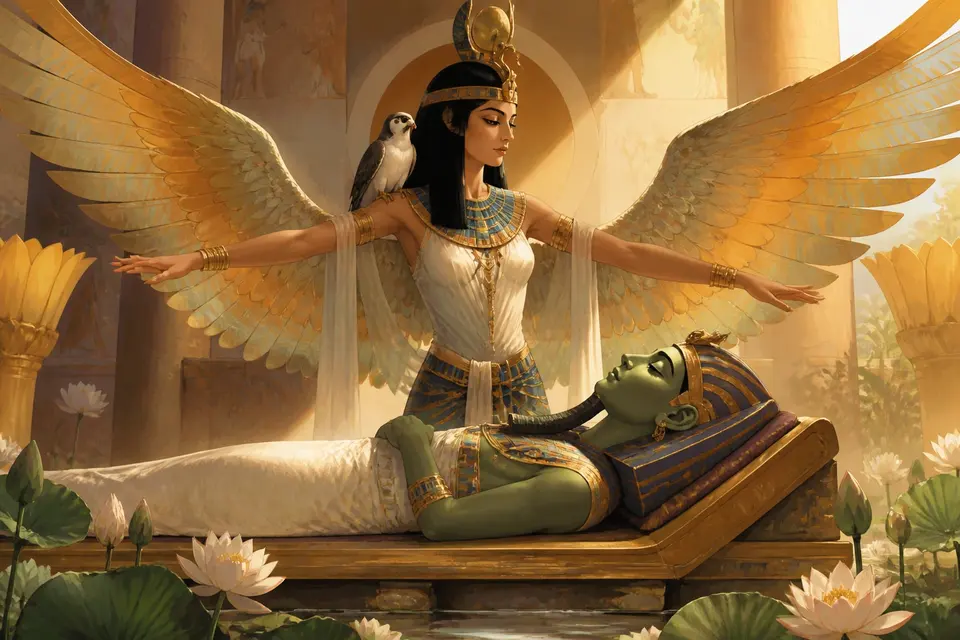
The body was dried with natron, a natural salt, then wrapped in hundreds of meters of linen, with amulets between the layers. A priest performed the Opening of the Mouth ceremony, touching the face with special tools so that the dead person could breathe, speak and eat again.
The road through the Duat
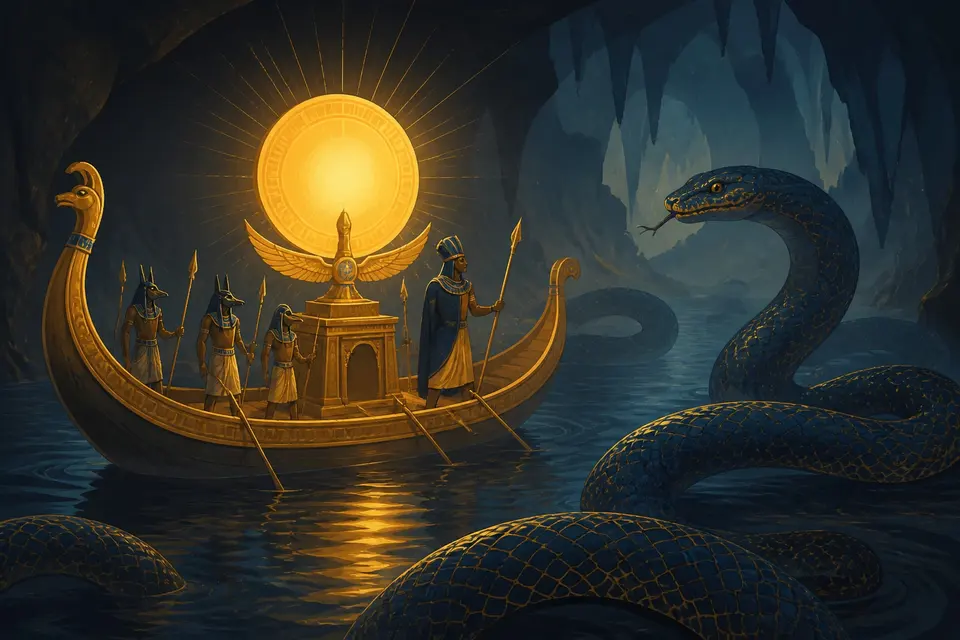
The afterlife began in the Duat, the underworld, a region with rivers, caves and gates guarded by creatures with names like “He who lives on snakes.” Souls needed spells to get through. The earliest were carved on the walls of royal pyramids around 2400 BCE and are known as the Pyramid Texts. Later they were painted on coffins, and from about 1550 BCE written on papyrus for people who could afford them. These are what we now call the Book of the Dead. The Egyptian title was Peret em Heru, “Coming Forth by Day.”
The spells have numbers. Spell 125, the most famous, is about the judgment. Spell 30B is a plea to the heart not to speak against its owner. Spell 6 makes a small statue, a shabti, do the dead person’s work in the afterlife, which is why tombs are full of rows of them.
The weighing of the heart
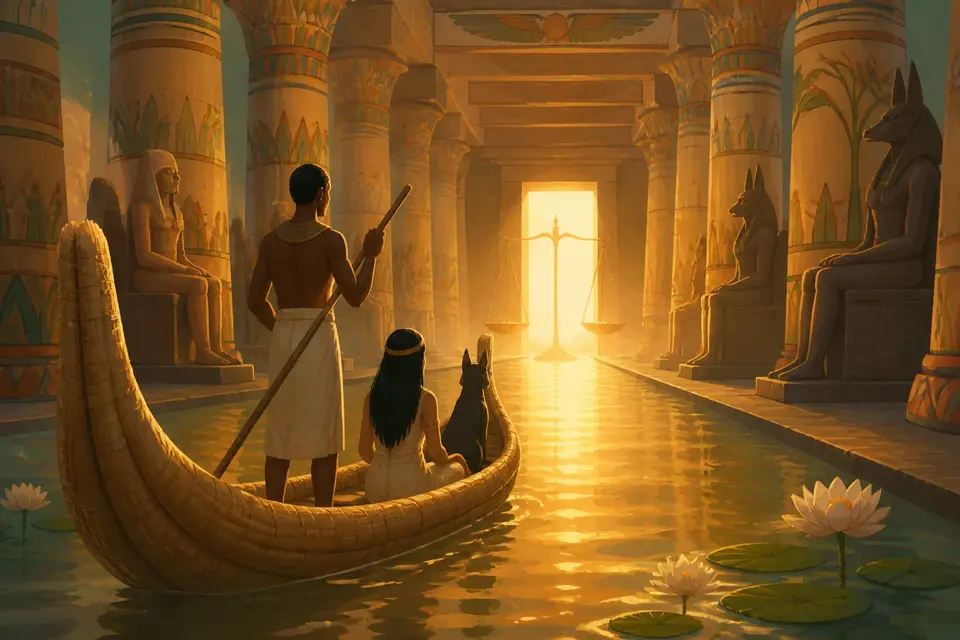
The climax takes place in the Hall of Two Truths. The dead person is led in by the jackal-headed Anubis. Osiris sits on a throne at the far end with forty-two judges. The heart is placed on one pan of a great balance. On the other pan lies a feather, the feather of Maat, the goddess who stands for truth, justice and the order of the universe. Thoth, the ibis-headed god of writing, records the result. Beside the scale crouches a creature called Ammit, “the devourer,” with the head of a crocodile, the front of a lion and the back of a hippopotamus.
Before the weighing, the dead person gives what is sometimes called the “negative confession,” a long list of things they have not done. “I have not stolen. I have not killed. I have not told lies. I have not made anyone weep. I have not eaten the heart.” Some are serious, and some are strange, such as “I have not polluted the water” and “I have not been deaf to words of truth.”
If the heart is as light as the feather, the person is declared “true of voice” and may proceed to the Field of Reeds, Sekhet-Aaru, a paradise that looks like an ideal Egypt, with golden fields of barley and emmer wheat, canals and neighbors. If the heart is heavy with wrongdoing, Ammit eats it, and that is the end: no judgment, no afterlife.
An ancient anxiety
What is most striking in the pictures of the weighing is how personal it feels. The dead person often stands anxiously at the side, with a tiny hand raised in greeting. The heart in the scale looks small and vulnerable. A few papyri show the heart saying exactly what it would say if it were being honest. This is why the spell to silence the heart was so popular.
Some of the most intimate objects found in tombs are heart scarabs, carved green stones placed over the mummy’s chest. On the back were inscribed the words of Spell 30B: do not stand against me as a witness.
The Egyptians’ question
The idea of being judged on the quality of your life is not unique to Egypt, but few cultures drew it so vividly. A heart weighed against a feather is a clear picture: how you lived has weight. It is one of the most famous images in ancient art, and, more than three thousand years later, still one of the easiest to understand.